
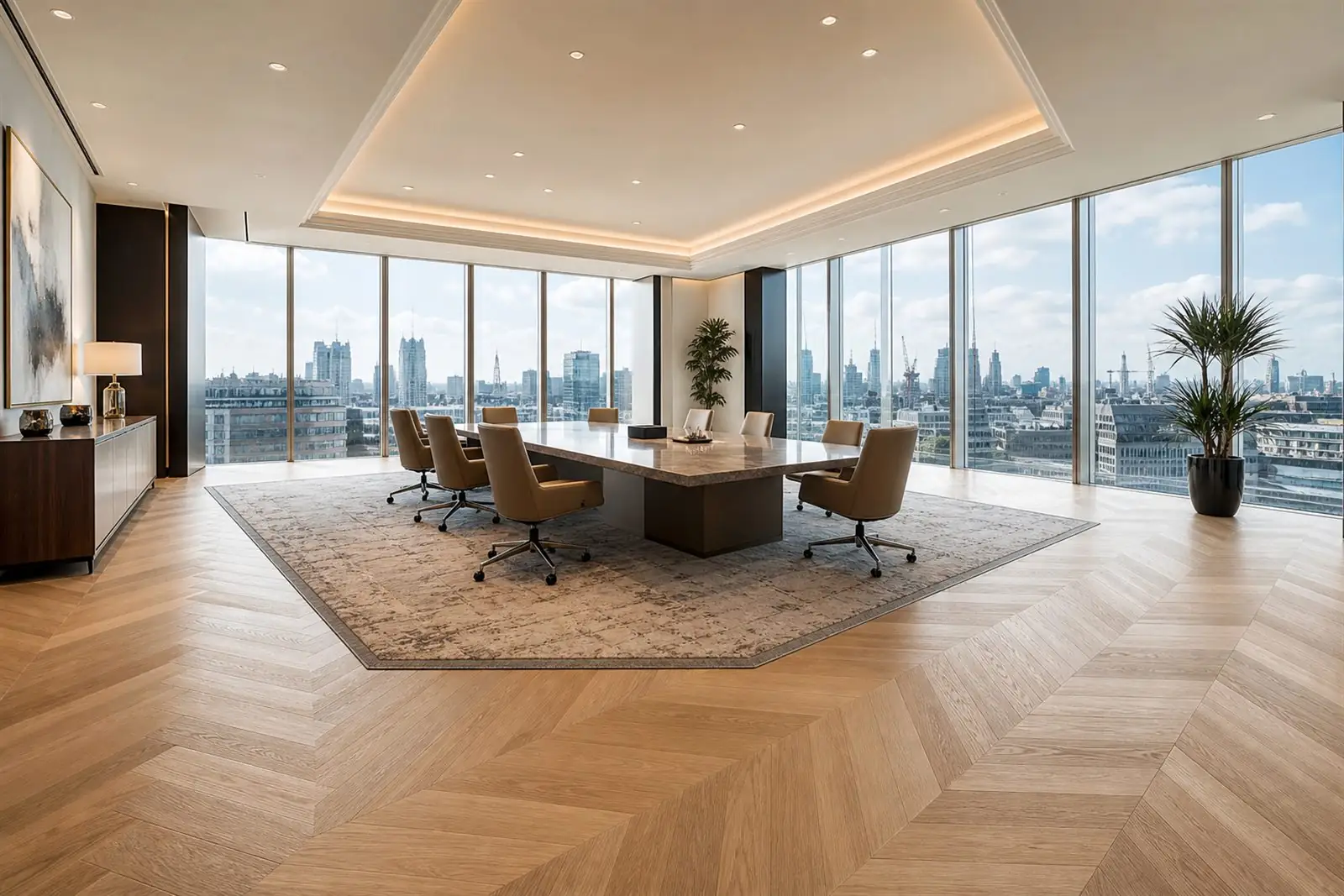
Lift the carpet in an older London building and there is a fair chance of finding an original wood block floor underneath. It might be tired, paint-spattered and missing a few pieces, but more often than not it is worth saving. The short answer to the question in the title is yes: most old parquet floors can be brought back, and the result usually looks better and lasts longer than anything you would lay new in its place. Here is how we approach it.
Why an original block floor is worth saving
They rarely make them like that any more. An original parquet floor is solid hardwood, often oak, laid block by block over a base that has already held for decades. The timber is dense, the wear layer is thick, and the patina that comes with age is something a brand new floor cannot fake. That character is exactly what gives a period reception, a boardroom or a Mayfair townhouse its sense of quality.
There is a heritage and value argument too. In a period or conservation-area building, the original floor is part of what makes the space what it is, and keeping it usually adds more to the value of the building than replacing it ever would. Pull it out and you lose something you cannot easily put back. Restore it and you keep the story while gaining a floor that is good for another generation.
The common problems we find
No two old floors are in quite the same state, but the same handful of issues come up again and again.
- Loose, lifting or missing blocks. Years of foot traffic, old adhesive giving up and damp underneath all loosen blocks. Some lift, some have already gone walkabout, and some are cracked.
- Old black bitumen adhesive. Many original blocks were bedded in bitumen. Where blocks have lifted, that old black tar is often still stuck to the back of them and to the subfloor.
- Cupping or movement from damp. A floor that has taken on moisture can cup, lift at the edges or push up into peaks. This usually points to a damp issue in the base that needs addressing first.
- Gaps. As timber dries and shrinks over the years, gaps open up between the blocks.
- Paint, glue or carpet-grip damage. Decades of decorating, old adhesives and carpet gripper rods leave their mark on the surface.
- A previous bad sanding. Sometimes the worst damage is from a rushed job in the past that took off too much timber or left the floor flat and lifeless.
The restoration process, step by step
Restoring a block floor is patient work, and it pays to do it in the right order.
- Survey and assess. We start by looking at the whole floor, checking how many blocks are loose or missing, testing for damp and judging how much wear is left in the timber. This tells us what is realistic and what it will take.
- Lift and re-lay or replace blocks. Loose blocks come up, the backs are cleaned, and they are re-laid true. Cracked or missing pieces are replaced.
- Source matching reclaimed blocks. For gaps in the pattern we source reclaimed blocks in a matching timber and size, so repairs blend in rather than stand out.
- Remove old bitumen and level the subfloor. The old black adhesive is removed and the base is made sound, level and dry. Skipping this is how floors fail again later.
- Gap fill. Once the floor is solid, gaps are filled so the finished surface reads as one piece.
- Careful sanding with the pattern. This is where skill counts. Parquet is sanded working with the direction of the blocks, not against them, to avoid cross-grain scratching. Good floor sanding takes the floor back to clean, fresh timber without stripping away more than it has to.
- Seal with lacquer or oil. Finally the floor is sealed. A hardwearing lacquer suits busy commercial settings, while a natural oil gives a softer, more matt look that is easy to patch in future. We talk you through which suits the room and the traffic.
This is specialist wood floor restoration, not a quick refresh, and the difference shows in how long the result holds up.
The patterns you are likely to have
Part of the appeal of parquet flooring is the geometry, and recognising the pattern helps when planning repairs.
- Herringbone. The classic, with blocks set at right angles in a broken zig-zag. Far and away the most common.
- Double herringbone. The same idea with blocks paired up, for a bolder, larger-scale effect.
- Chevron. Blocks cut at an angle and meeting point to point, forming a continuous V down the room. Cleaner and more formal than herringbone.
- Basketweave. Blocks grouped to look like a woven basket, often seen in older institutional and municipal buildings.
- Versailles panels. Large square panels with an intricate woven and diagonal pattern inside each one. The grandest of the lot.
Matching repairs to the pattern is fiddly but important. Get a block the wrong way round and the eye picks it up immediately.
Restoration versus full replacement
The instinct when a floor looks rough is to rip it out and start again. In our experience that is usually the wrong call for an original block floor.
Restoration is normally cheaper, because you are not paying for a whole new floor and the timber is already there. It is usually quicker, because much of the work is repair and refinishing rather than a full re-lay. And it keeps the original, which is the thing you actually wanted. Replacement only really makes sense where the floor is too far gone to save, the damp problem in the base cannot be resolved, or so little of the original remains that there is nothing left to restore. Even then, we would rather tell you that honestly after a survey than assume it from a photo.
A note on heritage and period buildings
In listed, period and conservation-area buildings, the floor may be part of what makes the property special, and in some cases part of what is protected. The right approach here is light-touch and reversible where possible: repair before replace, match materials honestly, and keep the character intact. We are comfortable working to that standard and treating an old floor with the respect it has earned.
Common questions
Can a floor with lots of missing blocks still be restored? Usually, yes. As long as the bulk of the floor and its pattern survive, we can source matching reclaimed blocks to fill the gaps and bring it back as one consistent floor.
How many times can parquet be sanded? Solid wood blocks are thick, so a well-kept floor can typically be sanded several times over its life. We always sand off the minimum needed to preserve as much timber as possible for the future.
Is restoration messy and disruptive? Sanding does create dust, but modern dust-extraction keeps it well controlled, and we plan the work in stages to limit disruption to a working building.
If you have an old block floor you are not sure about, the best first step is a proper look. Get a free quote and we will assess what you have, tell you honestly whether it is worth saving, and usually come back to you within 48 hours.