
Pubs & bars
Heavy-footfall timber sanded, repaired and re-sealed overnight. See our pub & bar flooring.
Wood floor restoration
Worn, tired or damaged timber brought back to life. From hardwood floor restoration and refinishing to board repairs, recoating and re-sealing, we restore commercial wood floors across London rather than rip them out, so you keep the character and cut the cost.
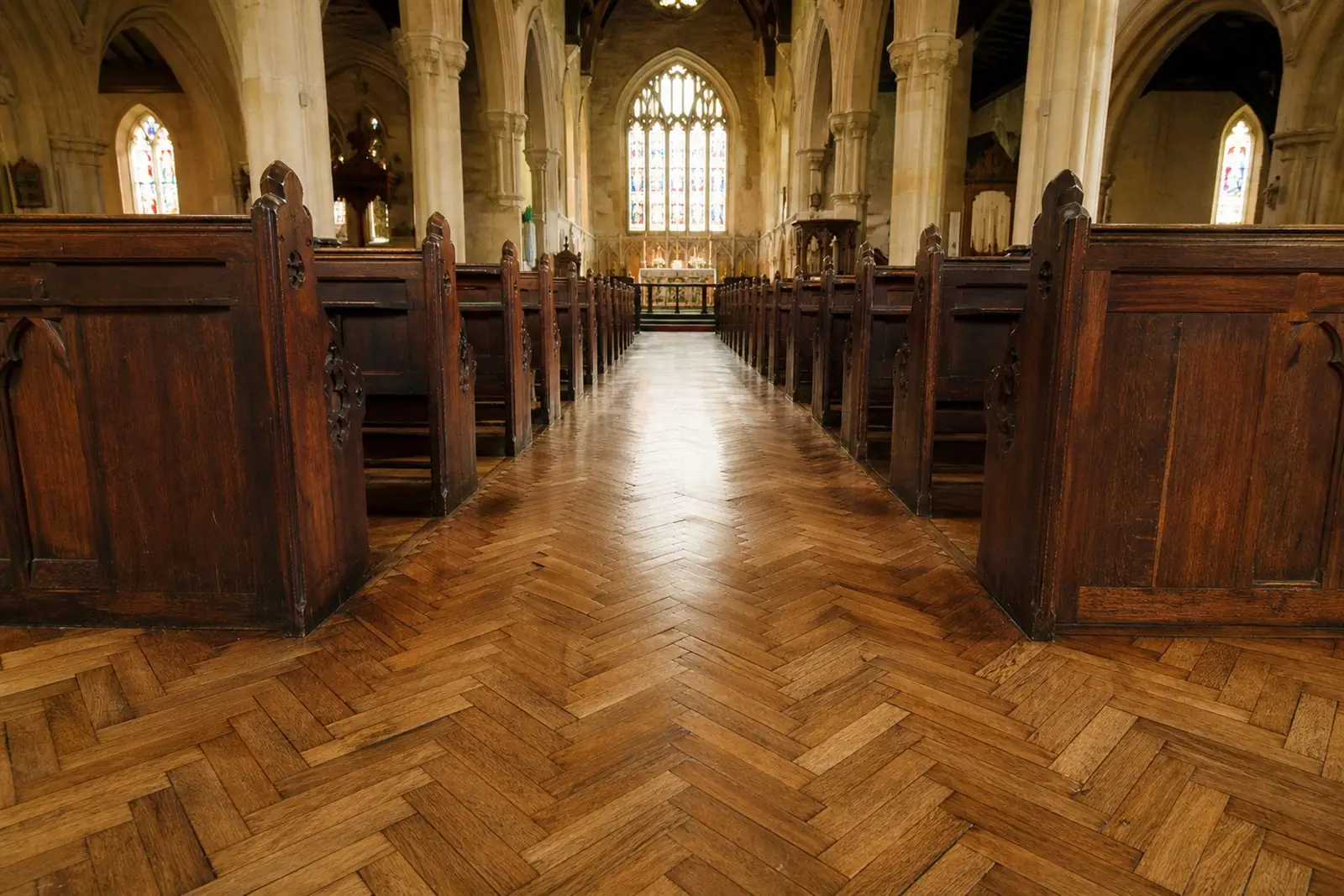
A real wood floor is worth saving. Years of footfall leave timber scuffed, scratched, faded or stained, but underneath that worn surface the boards are usually sound and full of character. Wood floor restoration revives them. Instead of stripping out a tired floor and starting again, we restore what you already have, hardwood floor restoration that sands away the damage, repairs the boards that need it and re-seals the surface so it looks like new. For London pubs, restaurants, offices, shops, churches and halls, restoring wooden floors is the quicker, cheaper and far less disruptive route to a floor you are proud of.
Restoration covers a wide range of work. At the lighter end, wood floor refinishing through a screen and recoat, or buff and recoat, lifts a dull floor with a fresh coat of lacquer or oil without going back to bare timber. Where wear runs deeper, a full sand and refinish takes the floor back to raw wood, removing scratches, old finishes and ingrained stains before re-sealing and re-oiling. Alongside this we carry out board repairs, replacing damaged boards, repairing water damage, fixing creaks and movement and gap filling, so the finished floor reads as one continuous, level surface rather than a series of patches. We can also change the floor colour entirely, staining it darker, applying a whitewash for a lighter look, or switching between matt and satin finishes and between lacquer and oil.
The commercial case for restoration over replacement is simple. It costs less, it is finished faster and it keeps the venue trading. We use trusted Bona and Osmo products, sample colours and sheens on your own boards before committing, and protect heritage and period floors that could never be matched by something new. The whole job is supply and fit under one fair, transparent written quote with no hidden extras, and where a venue cannot close we work out of hours and overnight so the floor is ready when you reopen. If you need related work, see our floor sanding, parquet flooring and sports hall floor sanding services, or our commercial wood flooring pillar page.
Where we restore
Heavy-footfall timber sanded, repaired and re-sealed overnight. See our pub & bar flooring.
Tired floors refinished with minimal disruption. See our office flooring.
Heritage and period floors restored, not replaced. See our church flooring.
Worn boards recoated and revived. See our retail flooring and school flooring.
Why choose us
What's involved
A full sand and refinish strips the floor back to bare wood, removing scratches, stains and old finishes before re-sealing.
A screen and recoat, or buff and recoat, refreshes a dull but sealed floor with a fresh coat of lacquer or oil, quickly and affordably.
Replacing damaged boards, water damage repair, fixing creaks and movement and gap filling so the floor reads as one surface.
Staining darker, a whitewash for a lighter look, or back to natural, with samples on your own boards before we commit.
Re-oiling or re-sealing in matt or satin, choosing lacquer or oil and trusted Bona and Osmo products to suit the space.
Sensitive restoration of older and period timber, preserving the character that a new floor could never match.
How it works
Common questions
In most commercial settings, restoration is the smarter call. If the boards are sound and there is enough timber left to work with, restoring a tired or worn wood floor is cheaper, faster and far less disruptive than ripping it out and starting again. A full replacement means new materials, longer downtime and skips full of perfectly usable timber, whereas restoration reuses what you already have and reveals the original character underneath years of wear. We only recommend replacement when boards are rotten, badly water-damaged beyond repair or worn too thin to sand. On a heritage or period floor in particular, restoring rather than replacing keeps the look and the value the floor was prized for in the first place.
A recoat, sometimes called a screen and recoat or a buff and recoat, lightly abrades the existing finish and lays a fresh coat of lacquer or oil over the top. It freshens a floor that is dull or lightly scuffed but still sealed, and it is quick and low-cost because we never go back to bare wood. A full sand and refinish strips the floor right back to raw timber, removes deep scratches, stains and old finishes, and rebuilds the surface from scratch. We use a recoat to maintain a floor and extend its life, and a full restoration to revive one that is genuinely worn or damaged. On site we will tell you honestly which your floor needs rather than selling you the bigger job.
Yes. Once a floor is sanded back to bare wood we can change the colour completely. That means staining it darker or warmer, applying a whitewash or limed effect for a lighter contemporary look, or simply bringing back the natural tone with a clear oil or lacquer. We can shift the finish too, from a glossy lacquer to a low-sheen matt or satin, or from lacquer to a natural oil. We work with trusted commercial products such as Bona and Osmo, sample the colour and sheen on your actual boards first, and only proceed once you have signed off the look.
Yes. Board repairs are a core part of restoration. We replace split, cupped, burnt or water-damaged boards with matched timber, lift and relay boards that have lifted, fix creaks and movement caused by loose fixings, and fill gaps and splits so the floor reads as one continuous surface again. Water damage is assessed first to make sure the source is dealt with and the subfloor has dried, then affected boards are replaced or sanded and the whole area is refinished so the repair blends in. The aim is always a seamless floor, not a visible patch.
Yes. We regularly restore floors for London pubs, bars, restaurants, shops and offices overnight, at weekends or in phases so the venue keeps trading. Sanding, repairs, recoating and re-sealing are timed around your opening hours and dust is contained throughout, then we clean up behind us so you can reopen on schedule. The out-of-hours plan and timings are agreed up front in your written quote.
It depends on footfall. A busy bar or restaurant floor often benefits from a buff and recoat every couple of years to keep the seal intact, with a full sand and refinish only every several years when the finish has genuinely worn through. Quieter offices, churches and halls go far longer between full restorations. The trick is to recoat before the wear reaches bare timber, because re-sealing a still-protected floor is cheap and quick, whereas leaving it until the wood is exposed means a full restoration and more downtime.
From the guides
Parquet Flooring
How original parquet and wood block floors are restored: re-laying loose blocks, removing old bitumen, gap filling, sanding and refinishing.
Read the guideWood Flooring
When a commercial wood floor needs a recoat versus a full sand and refinish, the signs of wear to watch for, and how to make it last.
Read the guideFree, no-obligation quote
Tell us about your floor and we'll come back with a clear, fair price, usually within 48 hours. Supply and fit, fully managed, timed around your opening hours so you keep trading.