
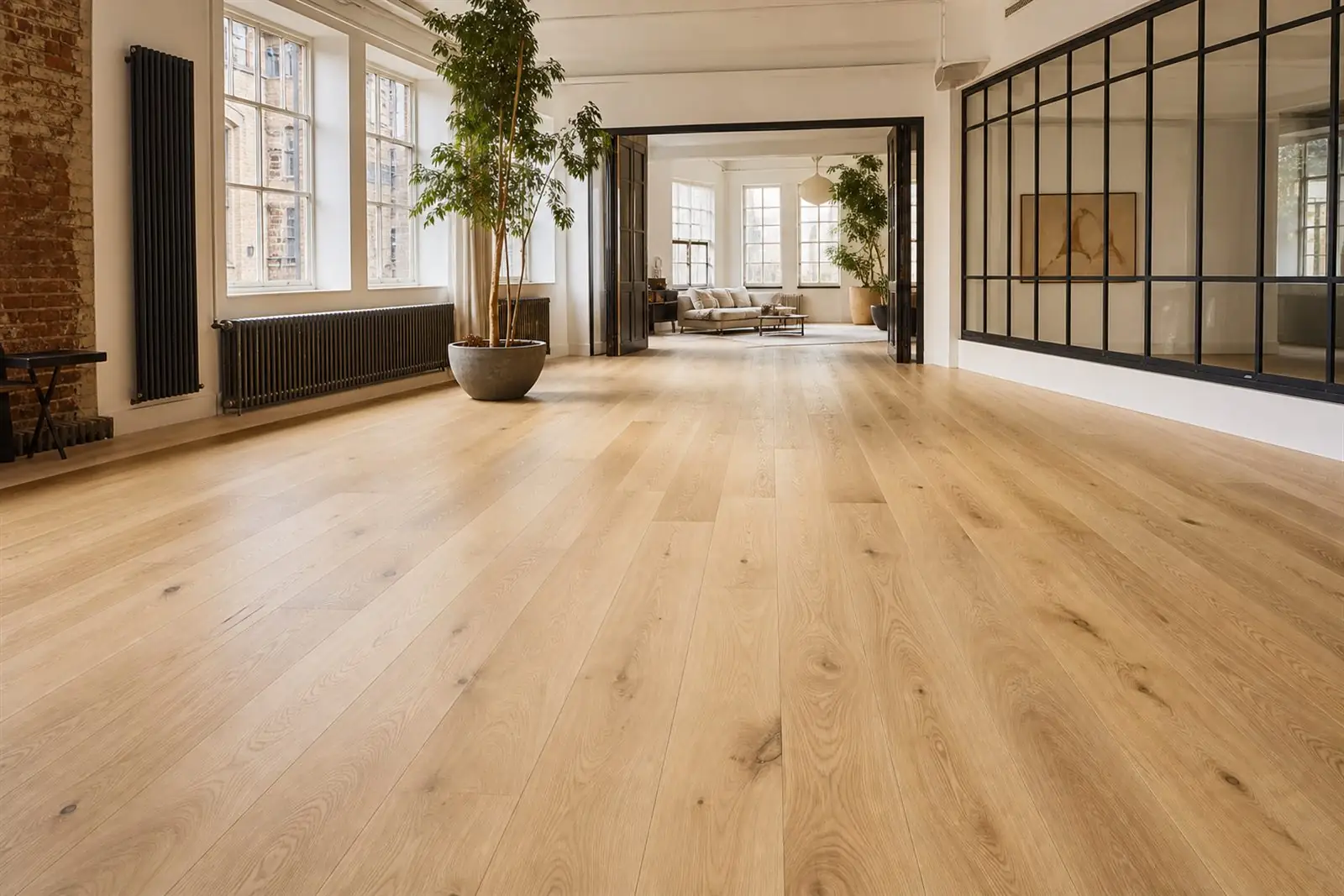
A good timber floor is one of the few commercial surfaces that gets better with age, but only if it is looked after. Left alone, a wood floor wears through its finish, then through the timber itself, and at that point you are into expensive repair rather than routine upkeep. The good news is that most of the work is light, occasional and cheap compared with replacing the floor. The trick is knowing the difference between a quick recoat and a full sand-and-refinish, and acting before the wear gets serious.
Recoat versus full refinish: two very different jobs
These two terms get used loosely, so it is worth being clear about what each actually involves.
A recoat, sometimes called a screen-and-recoat or a buff-and-recoat, is a light job. The floor is lightly abraded so a fresh coat of finish can key to the old one, then a new top coat is applied over the top. There is no deep sanding, no dust to speak of, and the floor stays at the same level. It refreshes the protective layer and brings back the sheen, and it is far quicker and cheaper than the alternative.
A full sand-and-refinish takes the floor right back to bare timber. The old finish is removed completely, the boards are sanded flat and smooth, and the whole surface is sealed again from scratch. This is the job that removes deep scratches, dents, stains and grey patches, and it is what people usually picture when they think of floor sanding. It is more disruptive, takes longer and costs more, which is exactly why you want to avoid needing it too often.
The core idea is simple. Recoat little and often to keep the finish topped up, and you push the need for a full refinish years into the future.
How often each is needed
There is no fixed number, because it depends entirely on traffic. A quiet office meeting room with carpet tiles at the door and a handful of people a day is a different world from a busy bar, a restaurant, a shop entrance or a school hall where hundreds of feet cross the same boards daily.
As a rough guide, a lightly used floor might want a recoat every few years, while a heavily used public floor can need one annually or even more than once a year in the busiest walkways. A full sand-and-refinish, by contrast, might only come round once a decade or more if the floor is recoated diligently, or much sooner if it has been left to wear through. The honest answer for any given site is that the floor tells you when it is ready, so the real skill is reading the signs.
The warning signs to act on
Walk your floor every few months and look for these. They are the floor asking for attention.
- Dull patches where the sheen has gone flat, usually along the main routes people walk. This is the finish wearing thin and is the ideal moment to recoat.
- Scratches that have gone through the finish into the wood. Light scratches in the finish are normal, but once you can feel them catching the bare timber, water and dirt can get in.
- Greying or blackening of the timber. Grey means the wood is exposed and weathering. Black usually means water has reached the bare timber and started to stain it, which often needs sanding out.
- Water marks, cup rings and pale cloudy areas, common near bars, kitchens and entrances where spills happen.
- Bare, worn walkways where the finish has gone entirely and the timber is exposed in a clear path. If you reach this stage you have probably missed the recoat window and are heading for a full refinish.
The pattern to notice is that almost all of this starts in the same places, so catching dull patches early and recoating them is what keeps the rest of the floor out of trouble. If the damage is already deep, our wood floor restoration service is built for exactly this.
A simple maintenance routine
Most floors that fail early were not abused, they were just cleaned wrongly or left without protection at the door. A basic routine makes an enormous difference.
- Use the right cleaning products. Sweep or dust-mop regularly, and damp-mop with a cleaner made for sealed wood floors. Avoid soaking the boards, and steer clear of harsh all-purpose cleaners, steam mops and anything abrasive, which strip and dull the finish.
- Stop grit at the door. Most wear is caused by grit and water tracked in on shoes acting like sandpaper underfoot. Good entrance matting at every entrance catches the worst of it before it reaches the timber and is the single cheapest way to protect a wood floor.
- Fit felt pads under chairs, tables and anything that gets dragged, and replace them when they wear or pick up grit.
- Deal with spills quickly. Wipe up water, drinks and anything else as soon as it lands, before it can sit on the surface and find its way into a joint.
Lacquer and oil are maintained differently
How you keep a floor topped up depends on the finish, and the two main types behave quite differently.
A lacquered floor has a film of finish sitting on top of the timber. It is hard-wearing and easy to wipe down, but when it wears it tends to wear as a whole area, and you usually recoat the entire floor or a complete section rather than spot-patching, because a small patch will show.
An oiled floor soaks into the timber rather than sitting on top, which makes it much friendlier to spot-repair. A worn or marked area can often be cleaned, re-oiled and blended into the surrounding floor without redoing everything, and topping the oil up across the floor periodically keeps it protected. Many busy commercial sites favour oil for precisely this reason, because tired patches can be touched up without closing the whole room.
If you are choosing a new floor or matching an existing one, our wood flooring page covers the options and how each is best looked after.
Why early recoating saves the floor
Here is the part that makes all of this matter financially. A solid timber floor, or a thick engineered one, has a finite wear layer. Each full sand-and-refinish removes a little of that timber, so a floor can only be taken back to bare wood a limited number of times before there is simply not enough material left to sand. Thinner engineered boards have even less to give.
Recoating does not touch that wear layer in any meaningful way. So every time you recoat instead of letting the floor deteriorate to the point of needing a full sand, you are protecting the timber you can never get back. Looked at over decades, a recoat-first habit is the difference between a floor that lasts a generation and one that wears out and needs replacing.
Common questions
How long does a recoat take, and do we have to close? A recoat is usually a one-day or overnight job for most rooms, and we can often work in zones or out of hours so the space stays usable. A full sand-and-refinish takes longer and needs the area clear while it dries.
Can you tell whether our floor needs a recoat or a full sand? Yes. The quickest way is for us to look at it. Dull, evenly worn finish is a recoat job, while deep scratches, grey or black timber and stains usually mean sanding. We will tell you which you need rather than selling you the bigger job.
Does every wood floor get the same treatment? No. Lacquer and oil are maintained differently, and engineered boards have a thinner wear layer than solid timber, so the right routine depends on what you have. We match the approach to your specific floor.
If you have a tired timber floor in a London office, bar, shop, restaurant or hall, we are happy to take a look and tell you honestly whether it needs a quick recoat or a full refinish. Get a free quote and we will usually come back within 48 hours.