
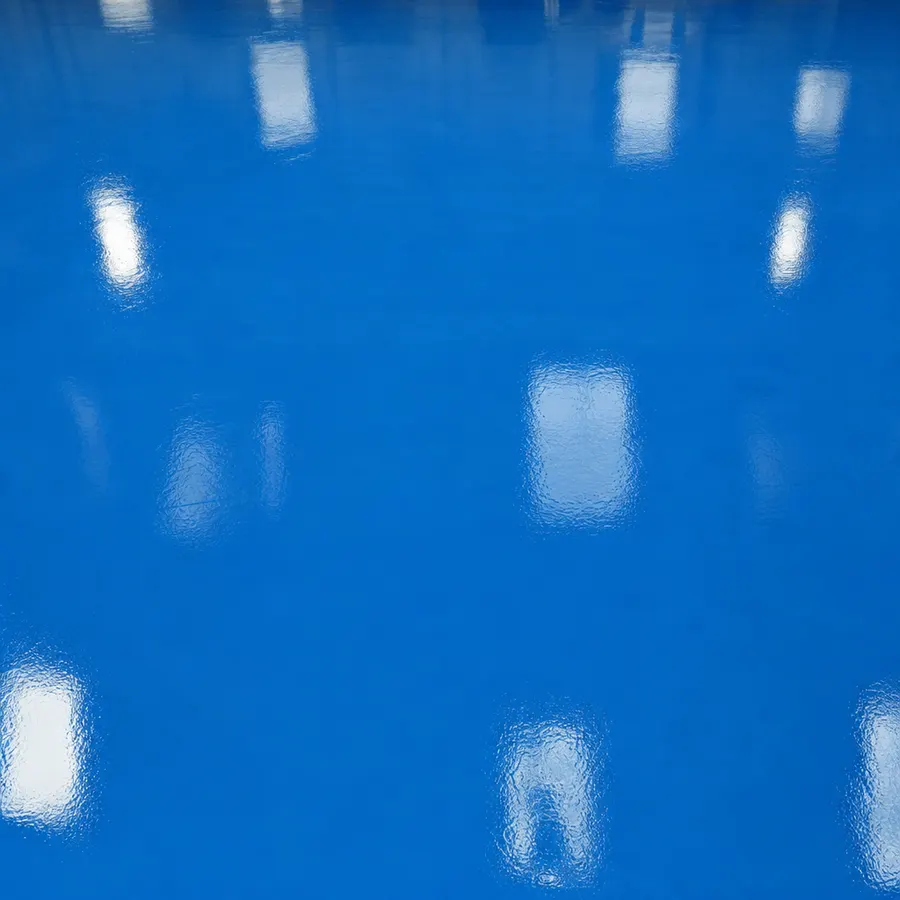
Traffic-blue high gloss
A deep, mirror-gloss epoxy that turns a workshop or showroom floor into a feature.
Resin & epoxy
Seamless, tough and easy to clean. Poured resin and epoxy floors shrug off heavy traffic, forklifts and spills, which makes them the natural choice for warehouses, industrial units and back-of-house areas across London.
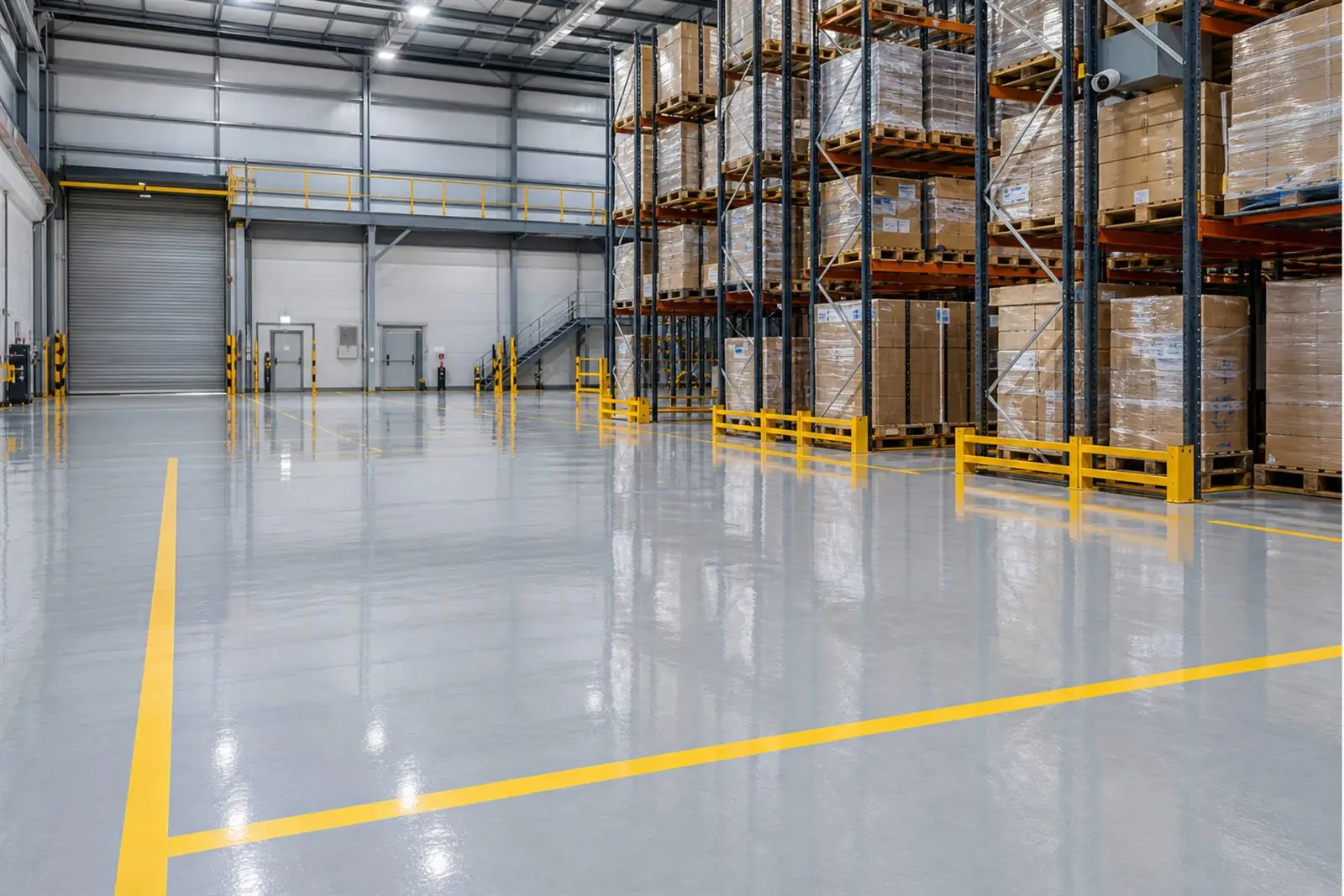
Resin and epoxy floors are poured as a liquid and cure into one seamless, jointless surface bonded to the slab below. With no grout lines or seams, there's nowhere for dirt, water or bacteria to collect, so the floor stays hygienic and wipes clean. It's also extremely hard-wearing, standing up to pallet trucks, heavy loads and constant foot traffic without chipping or lifting, which is why it has become the default for the toughest commercial and industrial floors across London.
As a commercial flooring contractor covering all of London, we supply and install resin and epoxy systems for warehouses, kitchens, car parks and back-of-house areas. We help you choose the right system, from hard-wearing epoxy for industrial units to decorative or anti-slip finishes for retail and public areas, and we prepare the substrate properly so the floor bonds and lasts. The whole job is supply and fit under one written quote, with no surprises, and we plan curing times around your operation so downtime is kept to a minimum.
Resin is as much about chemistry as it is about laying a floor. Epoxy and polyurethane systems each have their place, and the finish can be smooth and decorative or textured with broadcast aggregate for grip in wet and greasy areas. The performance you get, chemical resistance, impact strength, anti-slip rating and how soon you can walk on it, depends on the system chosen and, above all, on the preparation of the substrate beneath. We get both right, so the floor performs for years rather than failing early.
Finishes we pour
Resin isn't one product, it's a family of systems. Colour, gloss level, texture and markings are all specified to the job. Three ends of the spectrum:
A deep, mirror-gloss epoxy that turns a workshop or showroom floor into a feature.

Colour flakes broadcast into the resin add grip and hide wear. Popular for retail back-of-house and stairwells.

Matt polyurethane built for forklifts and footfall, with walkways and zones marked in as part of the job.
Why resin
Poured as one continuous surface with no grout lines or seams, so there's nowhere for dirt, water or bacteria to collect.
Takes pallet trucks, forklifts, heavy loads and constant footfall without chipping, denting or lifting.
Resists oils, cleaning chemicals and spills, making it well suited to industrial units, workshops and back-of-house areas.
Tough enough to absorb impacts and heavy loads, a key reason it works so well on warehouse and industrial floors.
Broadcast aggregate adds grip where it's needed, so the same system can suit a smooth showroom or a wet commercial kitchen.
A sealed, seamless surface sweeps and washes down quickly, keeping hygiene and dust to manageable levels.
Where resin works
Tough, dust-free floors that take forklifts and heavy loads day in, day out.
Seamless, hygienic, chemical-resistant floors for clinical and laboratory spaces. See our healthcare flooring.
Seamless, anti-slip floors for food prep and service areas.
Smooth, decorative finishes that handle high footfall. See our retail flooring.
Why choose us
How we work
We assess the slab and how the space is used, then recommend the right resin system, finish and slip level for the job.
You get a fair, itemised price for supply and fit, usually within 48 hours, with no hidden extras to follow.
We grind or shot-blast and repair the slab so the resin keys in fully and bonds for the long term.
The system is applied to manufacturer specifications and left to cure on a planned schedule, so you know exactly when to return to use.
Resin flooring FAQs
Both are poured resin systems that cure into a seamless surface, but they suit different jobs. Epoxy is very hard and chemically resistant, which makes it a strong choice for industrial units and warehouses. Polyurethane systems tend to be more flexible and tolerant of temperature change and impact, which suits kitchens and areas that take thermal shock. We recommend the system that matches how the space is actually used.
A smooth resin floor can be glossy, but slip resistance can be engineered in by broadcasting an aggregate into the surface to create an anti-slip finish. This is standard for commercial kitchens, warehouses and other areas where grip matters, and we specify the right level of texture for each space.
Resin bonds to the slab beneath it, so the strength of that bond decides how long the floor lasts. We prepare the substrate properly, typically by grinding or shot-blasting and repairing defects, so the resin keys in fully and won't lift or delaminate under heavy use, whether that's a warehouse or a busy back-of-house area.
Curing times vary by system and conditions, with foot traffic possible sooner than full load-bearing or chemical resistance. We plan the works and curing windows around your operation so downtime is kept to a minimum, and we'll tell you clearly when each level of use is safe.
From the guides
Resin Flooring
The real differences between epoxy and polyurethane resin flooring: hardness versus flexibility, chemical resistance, UV stability and cost.
Read the guideSafety Flooring
What a commercial kitchen floor needs in London: slip resistance, hygiene, drainage and coving, and durability against heat and grease.
Read the guideFree, no-obligation quote
Tell us about your space and we'll come back with a clear, fair price, usually within 48 hours. Supply and fit, fully managed, timed around your operation.