
School halls
Assembly and PE halls restored and re-marked. See our school flooring.
Granwood floor restoration
Granwood composition block floors need specialist care, not an ordinary sand. We restore worn Granwood floors in school and sports halls, churches and community buildings across London, bringing them back to look and perform like new for far less than a full replacement.
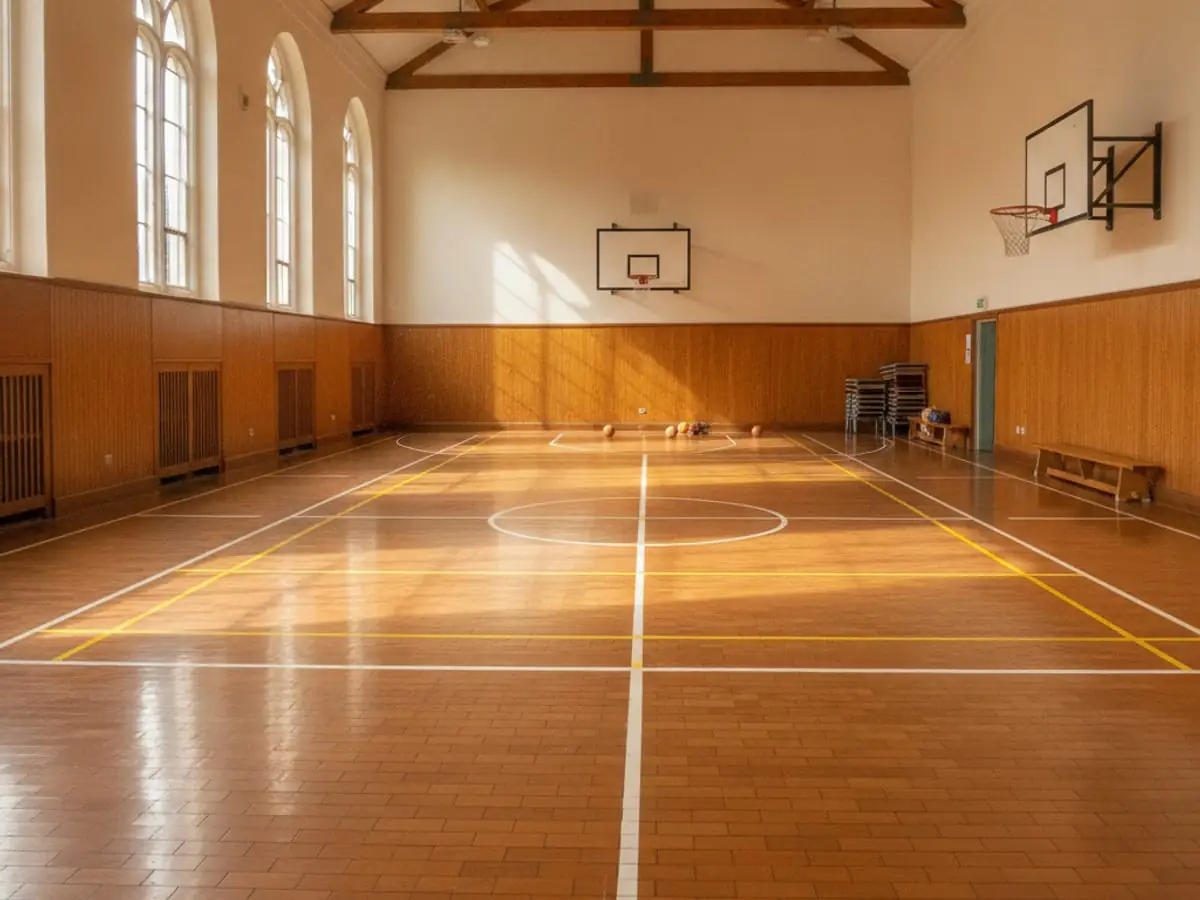
Granwood is a flooring most people have walked on without ever knowing its name. It is a composition block floor, made from a mix of wood and cement-based binders pressed into solid blocks, and it was laid widely from the mid-twentieth century onwards in school and sports halls, churches, drill halls and community buildings. Hard-wearing and quietly handsome, Granwood floors have lasted for decades, but years of footfall, sport and cleaning eventually leave them dull, scuffed and tired. The good news is that a worn Granwood floor can usually be restored, and that almost always makes more sense than replacing it.
The key point with Granwood is that it is not ordinary timber and must never be treated as such. Because it is a composition material rather than solid wood, it sands and seals differently, it has only a limited surface to work with, and it needs the correct seal system designed for composition blocks. Treat it like a normal wood floor and you risk over-sanding away the very surface you are trying to save, or sealing it with a finish that will not hold. That is why Granwood calls for genuine specialist restoration rather than a routine sand and refinish, and it is the difference between a floor that comes back to life and one that is damaged beyond easy repair.
Across London we restore Granwood floors as a single managed job, set out in one fair, transparent written quote. The process begins by assessing the condition of the floor, checking how much surface is left to work with and identifying any loose, lifting or damaged blocks. We then carry out a deep clean to lift years of ingrained dirt, polish and marking, followed by careful sanding and abrading that respects the limited surface and never takes off more than it should. Where blocks are damaged or loose we repair or replace them, and we fill gaps so the floor reads as one even surface again.
With the floor sound and clean, we reseal it with the right finish for Granwood, building up a durable, hard-wearing surface that stands up to heavy, shared use. In school and sports halls we then re-mark the court and game lines, matching the original layout or setting out new markings for the way the hall is used today. The result is a Granwood floor restored to look and perform like new. For sports venues this sits alongside our wider sports hall floor sanding and sports flooring work, and for other timber floors we also offer general floor sanding and full wood floor restoration.
Restoring rather than replacing makes particular sense with Granwood because original composition blocks are hard to source new, and a like-for-like replacement floor is a major cost and disruption. A careful restoration protects the floor you already have, keeps a piece of the building's history in place, and is far gentler on the budget. We carry out this work for school and sports halls, churches, and community and drill halls right across London, the same kinds of buildings we serve through our school flooring and church flooring services.
Where we work
Assembly and PE halls restored and re-marked. See our school flooring.
Granwood courts cleaned, resealed and re-lined. See sports hall floor sanding.
Composition block floors carefully restored. See our church flooring.
Shared-use halls brought back for heavy footfall and varied activities.
Why choose us
Why restore
A tired Granwood floor can usually be brought back to look and perform like new for far less than the cost of a full replacement.
Original composition blocks are difficult to source, so restoring the floor you have protects an asset that is not easily replaced.
We reseal with a finish made for Granwood, building a durable surface that stands up to heavy, shared use.
Loose or damaged blocks are repaired or replaced and gaps filled, so the restored floor is sound and even.
In school and sports halls we re-mark the court and game lines so the hall is back in use as soon as the floor is done.
Restoration is faster and far less disruptive than tearing out and relaying a whole floor, with one managed job from start to finish.
How it works
Common questions
In most cases a tired Granwood floor can be restored rather than ripped out. Granwood is a composition block, a mix of wood and cement-based binders pressed into solid blocks, and even when the surface looks worn, dull or scuffed the blocks underneath are often still sound. Restoration means assessing the floor, carrying out a careful clean and abrade, repairing or replacing any loose or damaged blocks, filling gaps and then resealing with the correct finish. This brings the floor back to look and perform like new for far less than the cost of a full replacement, which matters all the more because original Granwood is hard to source new. We only recommend replacement where the blocks themselves have failed beyond repair, and we will tell you honestly which way the floor should go after we have seen it.
Granwood looks like a block floor but it does not behave like solid timber, so it should never be treated as an ordinary wood floor. It is a composition material, with wood combined with cement-based binders, and it sands and seals differently as a result. There is only a limited surface to work with, so the floor must be abraded carefully and never over-sanded, or you lose the very surface you are trying to save. It also needs the correct seal system made for composition blocks rather than a standard timber lacquer. For these reasons Granwood calls for specialist restoration rather than a routine sand and refinish, and getting the approach wrong can do lasting damage to a floor that is difficult to replace.
Yes. Many Granwood floors are in school and sports halls, so re-marking the court and game lines is a normal part of the job. Once the floor has been cleaned, abraded, repaired and resealed, we re-mark the lines you need so the hall is ready for play again. We agree the markings with you before we finish, whether that means matching the original layout or setting out lines for the sports and activities the hall is used for now.
From the guides
Sports & Play
A clear guide to indoor sports hall and court flooring: surface types, line markings for multi-use courts, and how to keep them performing for years.
Read the guideChurches
Specialist church floor sanding and restoration across Surrey and London. We revive nave, vestry and hall timber floors with care for heritage wood.
Read the guideFree, no-obligation quote
Tell us about your hall and we'll come back with a clear, fair price, usually within 48 hours. Specialist Granwood restoration, fully managed, with block repairs, resealing and re-marking handled as one job.