
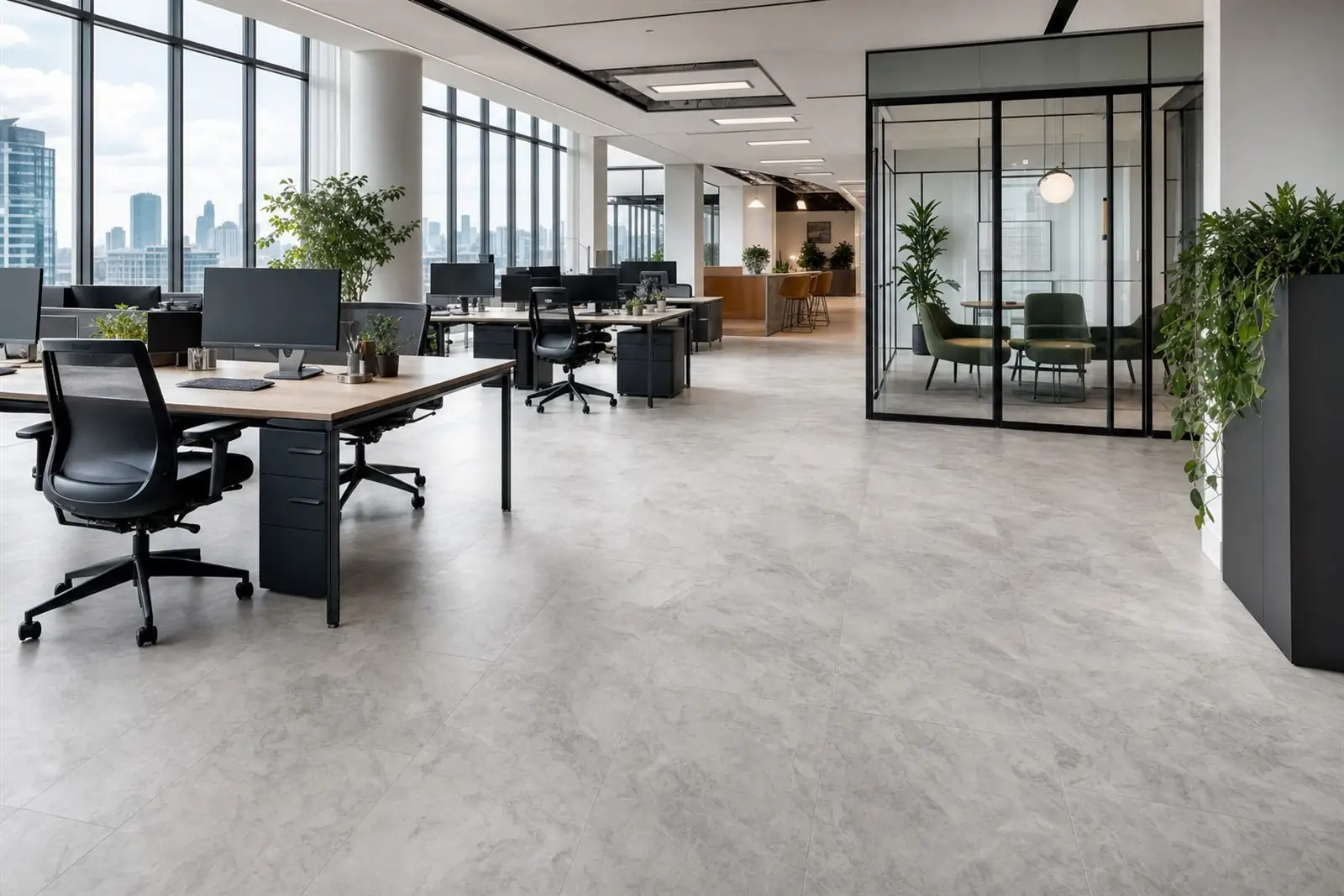
The floor is the first thing a customer walks on and one of the last things they consciously notice, which is exactly why it matters. It sets the tone the moment someone steps through the door, tells them whether they are in a budget shop or a premium boutique, and quietly steers them around the space. A retail floor is part of the brand as much as the signage, the lighting or the fit-out. Get it right and it lifts everything around it. Get it wrong and it drags the whole shop down, whatever you have spent on stock and shelving.
The catch is that a retail floor has to do two jobs at once, and they pull against each other. It has to look the part, and it has to take a beating. Here is how we think about specifying retail flooring for London shops and showrooms.
Look versus survival
A retail floor never stops working. Hundreds or thousands of feet cross it every day, trolleys and stock cages get wheeled over it, deliveries get dragged across it, and spills happen without warning. A surface that looks beautiful in the showroom but scratches, dents or wears through in a high-traffic shop is a false economy, because you will be patching or replacing it within a couple of years.
The trick is not to choose look or durability, but to find surfaces that deliver both, and to put the toughest options where the punishment is heaviest. That starts with thinking about the shop as a set of zones rather than one flat plane.
Zoning the shop floor
Walk a shop the way a customer does and you will see it is really several spaces in one. Each one wants a slightly different answer.
- The entrance is the hardest-working square metres in the building. It takes the dirt, grit and water off the street, and it is where slip risk is highest on a wet day. This zone needs matting and a robust, easy-clean surface behind it.
- Main aisles and walkways carry the relentless footfall and the trolleys. These want the most durable, scratch-resistant surface you can specify, ideally something that hides the odd scuff rather than showing every mark.
- Feature and display areas are where you can spend on look. A change of material or tone here draws the eye to a key range and signals quality, without having to pay for that finish across the whole floor.
- Tills and counters see people standing and shuffling in one spot for long stretches, so comfort underfoot and a hard-wearing finish both matter.
- Fitting rooms want something warmer and more comfortable, often a softer or quieter surface, and a finish that feels considered when someone is standing in bare feet.
Zoning like this keeps the budget where it earns its keep. You protect the floor where it gets hammered and lift it where customers are paying attention, rather than over-specifying everywhere or cutting corners across the board.
The main options
There is no single best retail floor, only the best fit for the brand, the traffic and the budget. These are the surfaces we specify most.
Luxury vinyl tile (LVT) is the retail favourite for good reason. It comes in convincing wood and stone effects, takes heavy footfall well, resists scratches and scuffs, is comfortable and quiet underfoot, and is straightforward to clean. You get the look of timber or natural stone without the cost, the maintenance or the fragility. For most shops and showrooms, LVT is the sensible default, and it lets you mix effects between zones to mark out display areas.
Polished concrete or resin suits brands going for an industrial, pared-back or contemporary look. It is seamless, extremely hard-wearing and easy to keep clean, with no joints for dirt to gather in. It works beautifully in the right setting, though it is harder underfoot and unforgiving of dropped stock, so it is worth weighing against the products you sell and the feel you want.
Real wood delivers a premium, warm feel that is hard to fake and signals quality instantly. It is the right call for high-end showrooms and boutiques where the brand justifies the spend and the maintenance. It needs more care than a vinyl and is less tolerant of water and heavy trolley traffic, so it tends to belong in feature zones rather than the busiest aisles. Our wood flooring options cover both solid and engineered boards.
Carpet or carpet tiles earn their place in specific zones rather than across a whole shop. They add warmth, comfort and sound absorption, which suits fitting rooms, quieter premium areas and upper floors. Carpet tiles in particular are practical because you can lift and replace a single damaged tile rather than recarpeting a whole area.
For the full picture across surfaces and sectors, our retail flooring page sets out what we fit and where each option works best.
Entrance matting is not an afterthought
If there is one thing that protects a retail floor more than any other, it is good entrance matting. Most of the dirt and water that wrecks a shop floor walks in on people’s shoes, and a properly specified matting system traps the bulk of it in the first few steps before it can spread across the sales floor.
That does three things at once. It keeps the rest of the floor looking sharp and cuts how often it needs deep cleaning. It protects the surface from the grit that grinds away finishes over time. And it cuts slip risk at the door on wet days, which is exactly where most accidents happen. A recessed matting well at the entrance looks clean and stops the mat shifting underfoot. It is a small part of the budget that pays for itself many times over, and our entrance matting systems are designed to do precisely this job.
Lighting, reflectivity and maintenance
A floor never sits in isolation. The way it reads depends heavily on the lighting above it. A high-gloss or polished surface bounces light around and can make a space feel brighter and larger, but it also shows every smear, scuff and footprint, which means more cleaning to keep it looking its best. A matt or satin finish hides marks better and gives a softer, more considered feel. It is worth deciding early whether you want that bright, reflective look or a calmer one, because it changes both the surface you pick and the cleaning regime you sign up to.
Maintenance is the part that gets forgotten in the excitement of the fit-out, and it is what keeps a floor looking new years later. The best retail floors are the ones that are easy to keep sharp with a simple daily routine, rather than ones that demand specialist treatment. We will always talk you through how a given surface needs to be cleaned and cared for, so the floor still looks the part long after the shop has opened.
Fitted around your trading
A shop that cannot trade is a shop that is losing money, so the last thing you want is the floor costing you trading days. Wherever we can, we plan retail installations out of hours or overnight, working in zones so you can keep the rest of the shop open while one area is refitted, and reopen on schedule. From a single feature area to a full shop or showroom fit-out, it is one managed job with one accountable price and one point of contact from survey to handover.
Common questions
What is the most durable flooring for a busy shop? For most retail spaces, a good-quality LVT gives the best balance of durability, looks and cost in the main aisles. Where you want something even tougher and a more industrial feel, polished concrete or resin is extremely hard-wearing. The right answer depends on the look you are after and the kind of traffic and stock movement the floor has to take.
Can you fit our flooring without closing the shop? In most cases, yes. We plan the work in zones and out of trading hours or overnight where we can, so you keep the shop open and reopen on time. We will set out a schedule with you before we start.
How do I stop the floor looking tired so quickly? Start at the door. Proper entrance matting traps the dirt and water that does most of the damage, and a sensible daily cleaning routine matched to your chosen surface keeps it sharp. Choosing a finish that hides marks rather than showing them also makes a big difference day to day.
If you are fitting out or refurbishing a shop, showroom or retail space in London, we are happy to take a look. Get a free quote and we will usually come back within 48 hours.